
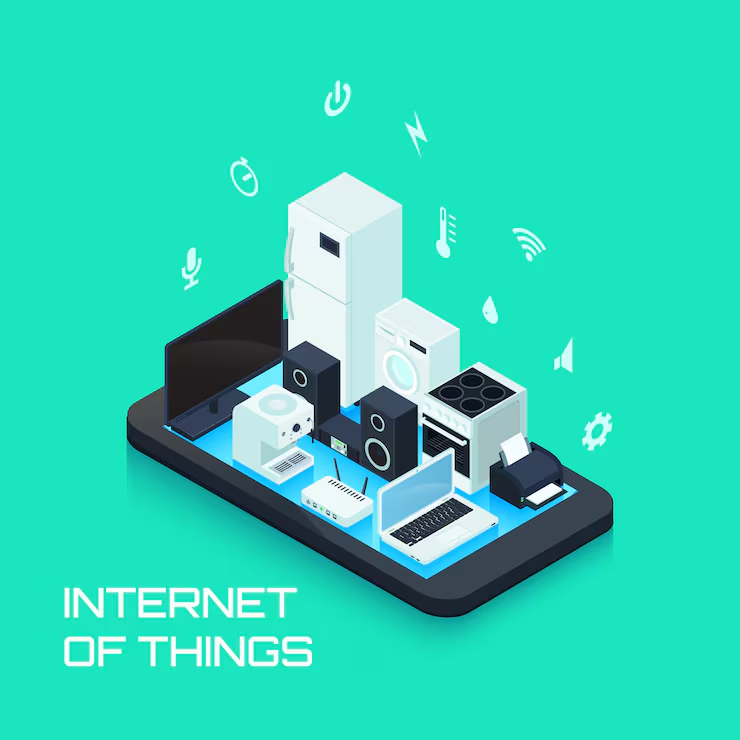
You are entering a period in which connected devices communicate faster, make smarter decisions, and deliver more reliable results. This shift will reshape industries, strengthen digital services, and create new opportunities for IT professionals worldwide.
This guide explains how IoT, 5G, and edge computing work together, what they will change, and how you can prepare for the future. Let’s get straight to the value.
How 5G Will Transform IoT Connectivity and Real-Time Performance
5G brings something IoT has been waiting for. A network that supports millions of devices without slowing down. A connection fast enough to handle real-time instructions. A stable system that keeps sensors and machines running smoothly.
You get speed, reliability, and low delay, which makes IoT stronger and more responsive.
Every IoT device depends on fast communication. Smart locks, cameras, robots, medical sensors, and factory machines need to send and receive data instantly. 5G delivers that.
Your devices no longer struggle to stay connected. They work in harmony, even in busy environments.
With 5G, you will see:
- Higher upload and download speeds
- Less delay in communication
- More stable connections during peak hours
- Better performance in smart homes, factories, and cities
- Stronger support for IoT devices in large networks
This upgrade improves systems that depend on quick reactions. Traffic systems respond faster. Health devices send alerts instantly. Machines fix issues before failing.
Businesses gain more control over operations because real-time data becomes normal, not a luxury.
5G turns IoT into a powerful network that can support large-scale automation, smarter devices, and better decision-making. You will see this impact everywhere in the coming years.
Why Edge Computing Is Becoming Essential for Scalable IoT Systems
Edge computing processes data near the source rather than relying on a distant cloud. This removes delays, reduces network pressure, and improves response times.
You benefit because IoT devices often need instant decisions. A one-second delay can break the user experience or cause system failure.
Edge computing gives IoT the strength to handle real-time tasks without slowing down.
You get:
- Local data processing
- Lower network traffic
- Faster system responses
- Better security since data stays closer to the source
- Stronger performance for time-sensitive devices
Industries depend on edge computing to run their daily operations:
- Factories use it for automation and machine control
- Hospitals use it for patient monitoring
- Transport systems use it for route and traffic updates
- Retail stores use it for smart inventory and user activity tracking
Edge computing and 5G work well together. 5G provides ultra-fast connections. Edge computing provides ultra-fast processing.
This combination makes IoT stable, scalable, and ready for heavy real-world use.
You will see more organizations adopt edge computing because it keeps systems reliable, even when the cloud has delays or outages.
The future of IoT will rely heavily on this model.
The Impact of 5G and Edge Computing on IT Infrastructure Efficiency
5G and edge computing will change how IT departments design and manage infrastructure. Instead of sending all data to a central system, companies will process information in layers.
This model improves system performance and reduces load on the cloud.
You will see a shift toward distributed computing. Edge devices handle quick actions. Cloud servers handle long-term storage and complex work.
This creates a balanced system that avoids bottlenecks.
With this structure, IT teams gain:
- Faster applications
- Stronger uptime
- Better data flow
- Fewer interruptions
- Improved user experience
Supply chains become smarter. Machines send alerts before they break down. Delivery services get real-time location data.
Retail stores track customer activity and adjust stock instantly.
Manufacturers monitor equipment health with precision.
This level of efficiency produces better results with fewer errors.
Businesses save time, reduce costs, and create stronger digital systems.
IoT, 5G, and edge computing prepare companies for future automation, large-scale data processing, and smart decision-making.
The performance boost will carry the IT industry into its next major phase.
Check Out: MUVERA Algorithm Guide: How Google’s New Update Affects Your Website Rankings
IoT Security Challenges You Must Prepare for in a 5G Powered World
As IoT grows, so do security risks. Each device becomes a potential entry point for attackers. A weak sensor, an outdated camera, or an unsecured smart device puts the entire network at risk.
You need stronger security for a future powered by fast connections.
Some common IoT risks include:
- Weak device settings
- Outdated firmware
- Unsafe home or office networks
- Poor data protection
- Hard to monitor large device networks
Security becomes more complex when 5G connects millions of devices at once.
You must treat each device as part of a larger system that needs full protection.
Edge computing helps by processing data locally, reducing the amount of information sent over the internet.
This lowers exposure but does not remove risk.
Businesses must prepare by:
- Setting strong authentication
- Updating device software
- Monitoring network activity
- Using encryption for data
- Training staff on basic security practices
IoT security will shape the future. Your systems must be safe for users to trust them.
Good protection builds long-term reliability and keeps operations secure.
The Future of Smart Cities Powered by IoT, 5G and Edge Intelligence
Smart cities will grow fast once 5G and edge computing become common. IoT devices will help cities run smoothly, respond faster, and serve citizens better.
You will see improvements in traffic, waste management, public safety, and healthcare.
Traffic lights will adjust automatically based on road activity.
Waste bins will alert teams when they need collection.
Street lights will save energy by responding to movement.
Emergency systems will send alerts instantly.
Hospitals will track patient data in real time.
Smart cities rely on quick decisions, and edge computing gives them the speed they need.
5G ensures devices remain connected at all times.
This model creates:
- Cleaner streets
- Safer communities
- Better energy use
- Faster public services
- Smarter infrastructure
Countries in Africa, the Middle East, Europe, and Asia are already investing in smart city technology.
This opens new opportunities for IT professionals who understand IoT, networks, cloud systems, and automation.
Smart cities will become a major driver of digital transformation worldwide.
How Businesses Can Use IoT and Edge Computing To Improve Operations
Businesses now use IoT to improve everyday operations. You will see IoT sensors track inventory, monitor machines, and secure assets.
Edge computing strengthens these tools by processing data locally and responding instantly.
Companies benefit from:
- Lower costs
- Better automation
- Reduced human error
- Stronger system performance
- Improved customer experience
Retail stores use IoT to track stock levels.
Factories use IoT to detect machine issues before failure.
Transport companies use IoT to track fleets and plan routes.
Agricultural businesses use IoT to manage soil, water, and crop health.
Edge computing makes these systems faster and more reliable.
It helps businesses take action immediately without waiting for cloud processing.
These tools help companies stay competitive in crowded markets.
Businesses that adopt IoT early will build stronger operations and long-lasting customer trust.
The New Skills IT Professionals Need for an Advanced IoT Environment
To succeed in an IoT-driven future, you need specific skills that match modern systems.
Companies want professionals who can build, manage, and secure connected environments.
Important technical skills include:
- IoT device setup and management
- Cloud computing skills across AWS, Azure, or Google Cloud
- Basic coding in Python, JavaScript, or C
- Network management
- Cybersecurity
- Data analysis
- API integration
- Device monitoring tools
You also need soft skills that help you work with teams.
Clear communication helps avoid mistakes.
Strong problem-solving helps you handle complex systems.
IoT grows fast. New tools appear often. You stay relevant by learning continuously.
This market will produce high-paying jobs in IoT engineering, network security, automation, and cloud architecture.
The future favors professionals who combine technical skill with curiosity and discipline.
Africa’s Roadmap for Smarter IoT-Driven Growth
Africa faces real challenges with power, hardware, and network stability. These issues make it harder for businesses to adopt IoT and build systems that operate at global standards.
Many organizations have the ideas, ambition, and talent, but lack the technical foundation and tools needed to reach their goals.
Grandscale Digital solves this problem by offering digital solutions designed for African environments.
You get well-built software, mobile apps, IoT-ready systems, and practical support that help your business grow without fighting technical limitations.
Grandscale Digital provides:
- Strong product design
- Reliable software development
- Custom tools for African markets
- Scalable systems that improve performance
- Support that guides your business through adoption and growth
With the right solutions, Africa can unlock the next stage of digital progress.
IoT becomes easier to adopt.
Systems run more reliably.
Businesses operate at global standards.
This roadmap gives African companies the support they need to scale. Grandscale Digital ensures your journey into IoT is smooth, stable, and built for success.
Key Takeaways
- IoT will grow faster with 5G and edge computing
- Edge devices make IoT more reliable by processing data locally
- 5G improves speed, stability, and real-time communication
- Smart cities will rely heavily on IoT systems
- Security must be strong because more devices mean more risks
- Businesses get faster automation and lower costs with IoT
- IT professionals need cloud, network, and device management skills
- Grandscale Digital helps African businesses adopt IoT the right way


[…] Check Out: Flutter vs React Native: Which Cross-Platform Framework Is Right for Your App […]